At the January SDoH Summit, MDHHS has rolled out Phase III of the statewide SDOH Strategy, the Innovation phase. Phase III builds on the previous two phases which produced structural interventions like community information exchange (CIE), the integration of community health workers (CHWs), and strategic partnerships for health equity.
There are three elements of focus in Phase III:
- Launching SDOH Hubs to foster collaboration and innovation and support community-driven initiatives;
- Aligning efforts across sectors utilizing a Health in All Policies (HiAP) approach to integrate and articulate health considerations into policymaking; and
- Building on health equity partnerships to close the gap in disparate health outcomes and advance health equity.
The first SDoH hub locations were announced at the summit, with additional locations to be announced in coming months. The four locations that launched as hubs in January 2024 were:
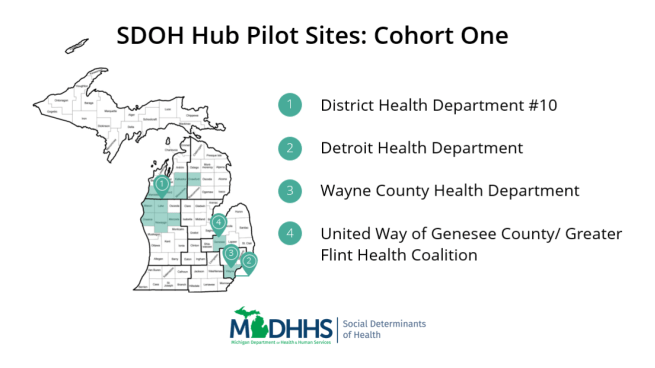
Congratulations to the first four hub sites! Additional hub sites will be announced in April and in May. MDHHS explains that they will serve four functions:
- RESOURCE SHARING: Hubs facilitate the sharing of resources among different programs. For instance, a housing assistance program might collaborate with a health care provider to ensure individuals have access to stable housing, which in turn positively impacts their health. By sharing information and services, these programs optimize their impact.
- FUNDING INTEGRATION (Braided Funding): These hubs often employ a strategy called funding braiding, where multiple funding sources are combined or coordinated to support comprehensive services. This approach allows diverse programs to combine their funding streams, reducing duplication and maximizing the utilization of resources.
- TECHNICAL ASSISTANCE: Hubs offer technical support and expertise to participating programs. For instance, a health program might require assistance in understanding the social needs of their patients. By collaborating with social service programs within the hub, they can gain insights and guidance on how to address these needs effectively.
- ALIGNED APPROACH: By bringing together different programs, hubs foster a more aligned and coordinated approach to service delivery. For example, a community health clinic might work with local education initiatives to ensure children receive proper health care and nutrition, enhancing their academic performance.
We’re excited about learning from the hubs and supporting their success. Phase III of the MDHHS SDoH Strategy provides an exciting opportunity for partners in communities across the state to come together to support cross-sector care and we will provide updates on how the work is progressing in future editions. You can also link to the website for more information: SDOH Hub Pilots.
 Michigan Multipayer Initiatives