We’ve previously covered the upcoming introduction of work requirements for the Healthy Michigan population and now there are new resources that can be helpful for healthcare providers and community-based organization as well as for those who are helping friends and neighbors navigate coverage.
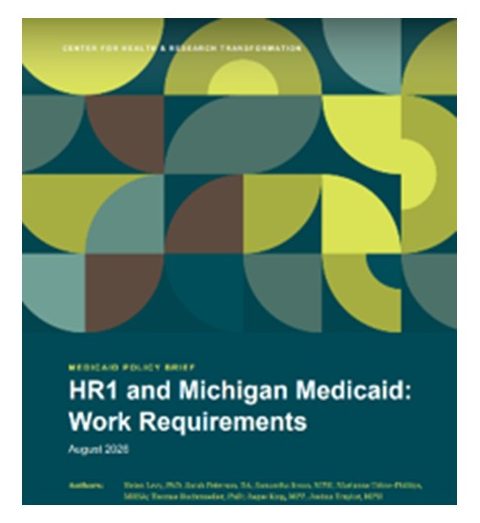
The Center for Healthcare Research and Transformation has produced an excellent piece (HR 1 and Michigan Medicaid Work Requirements) that focuses on the implementation of the requirements in Michigan including how engagement and exemption information is verified as well as lessons learned from previous efforts in other states.
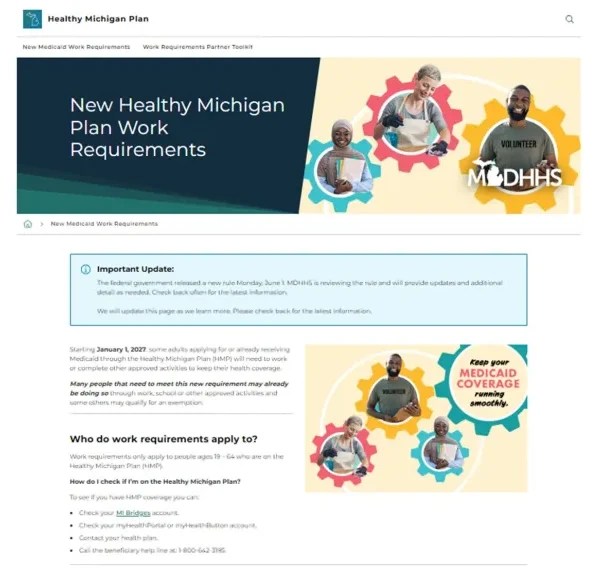
The Michigan Department of Health and Human Services (MDHHS) has also created a helpful website that provides user-friendly guidance about who the work requirements apply to as well as those who are exempt (excused) from work requirements. Specifically, they note that even if someone is on the Healthy Michigan Plan (HMP), they may be exempt (excused from meeting) work requirements if they are:
- Already subject to work requirements for food (SNAP) benefits.
- Already meeting work requirements for cash (TANF) benefits.
- Pregnant or gave birth within the past 12 months.
- A parent or caregiver of a child age 13 or under.
- A caregiver of a person(s) with a disability (someone who needs help with daily activities).
- An American Indian or Alaska Native (AI/AN).
- A person that was in foster care at age 18 and is currently younger than age 26.
- A disabled veteran.
- In a treatment program for a substance use disorder.
- In jail or prison now or in the past three months.
- A person with complex health needs, also referred to as medically frail.
- Living with a substance use disorder.
- Living with a physical, intellectual or developmental disability that makes it hard to do daily activities.
- Living with a mental health disorder.
- Living with a serious health condition that requires regular treatment.
- Experiencing temporary hardship, which is a short-term situation that may make it hard to work or complete other qualifying work activities. In these cases, you may not need to meet work requirements for a limited period of time. Temporary hardships include:
- Receiving care in a facility such as a hospital, nursing facility, psychiatric hospital, facility for people with intellectual disabilities, etc.
- Traveling outside of your community of residence for medical care for yourself or a dependent because it is not available in your community.
- Living in federally declared disaster areas.
- Living in an area with a high unemployment rate.
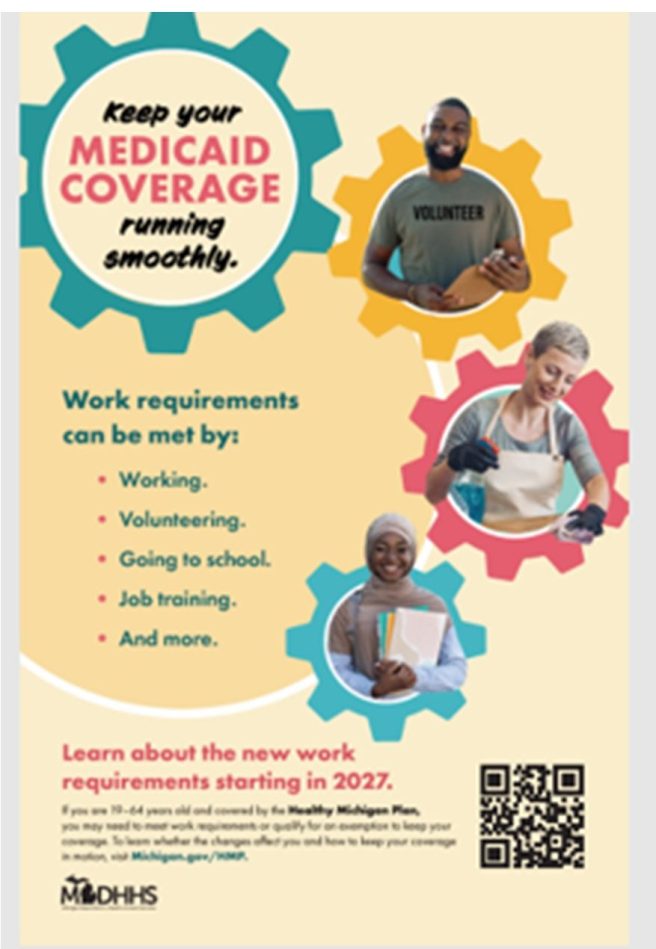
Also, MDHHS has created a set of resources for community-based organizations and other community partners who are working to help the people that they serve understand the changes. The Community Partner Toolkit website includes educational resources, outreach materials, and promotional tools that can be used to share information with your communities and help individuals understand these upcoming changes. Are you looking for print ads, posters, social media posts, digital graphics, and presentation decks from MDHHS about the upcoming changes? They’re all in the Community Partner Toolkit site.

